
 By
By 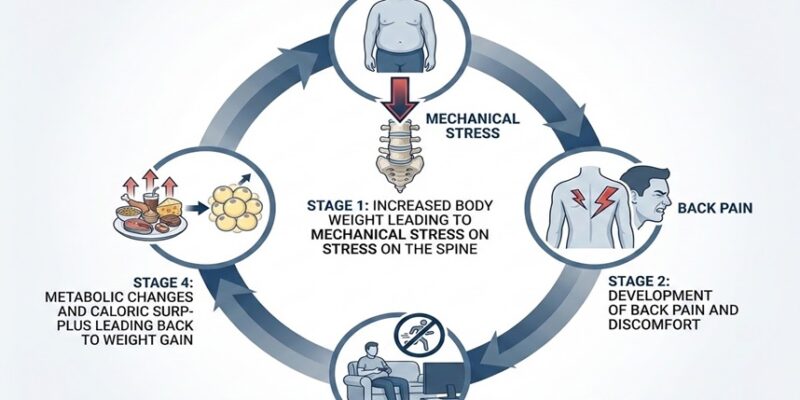
When Two Health Problems Become One Cycle
Weight gain and back pain can start for completely different reasons. But when they happen at the same time, they can begin making each other harder to manage.
Extra body weight can increase the physical demands placed on the spine. At the same time, ongoing pain can make it harder to walk, exercise, sleep well, or keep up with everyday tasks. As activity drops, weight may gradually increase, adding another challenge for a body that’s already uncomfortable.
The connection isn’t as simple as saying excess weight causes back pain or inactivity causes weight gain. Muscle weakness, poor sleep, stress, metabolic health, medications, work demands, and existing medical conditions can all play a role. Looking at the full picture helps explain why progress can feel slow when only one part of the problem is being addressed.
How Additional Weight Can Affect the Spine
The spine supports the upper body while allowing us to bend, twist, stand, and walk. When body weight increases, the muscles, joints, discs, and connective tissues involved in those movements may have to handle greater loads.
How much that matters varies from person to person. Weight distribution, posture, muscle strength, age, activity level, and existing spinal conditions can all affect how the body responds.
For some people, carrying more weight around the abdomen can shift the body’s center of gravity forward. The lower back and surrounding muscles may then have to work harder to maintain balance and posture. That doesn’t mean everyone at a higher body weight will develop back pain, but the added mechanical demand can be one contributing factor.
When back discomfort is interfering with daily life, weight management may become part of a broader conversation about health. A weight loss clinic for men, such as EveresT Men’s Health, may look at weight concerns alongside lifestyle, men’s health needs, and individual medical factors. The right approach depends on the person, not simply the number on the scale.
Pain Can Lead to Less Movement
Back pain can change how someone approaches ordinary activities. A person who used to walk after dinner may stop because standing or walking has become uncomfortable. Someone who enjoyed going to the gym may begin avoiding workouts because certain movements trigger pain. Even grocery shopping, household chores, or climbing stairs can start to feel demanding.
Reducing activity for a short time can make sense after an acute injury, particularly when a clinician recommends temporary restrictions. Problems are more likely to develop when that avoidance continues for weeks or months. Muscles can lose strength, cardiovascular fitness may decline, and movements that once felt easy can start requiring much more effort.
Pain can also create fear around movement. Someone may worry that bending, lifting, or exercising will make an injury worse. Appropriate movement and rehabilitation may still be possible, but figuring out what’s safe often requires an individualized assessment rather than broad assumptions about back pain.
Deconditioning Can Make Daily Life Harder
When activity levels fall, the muscles that support the spine, hips, and legs can lose strength and endurance. This deconditioning can make even simple movements more tiring.
A short walk may feel harder than it used to. Standing for long periods can become uncomfortable. Returning to exercise after weeks or months of inactivity may feel especially difficult.
Pain can also change the way a person moves. Some people lean to one side, shorten their stride, avoid twisting, or rely more heavily on certain muscles. Those adjustments can be useful in the short term, but when they persist, they may contribute to stiffness or additional discomfort.
Ongoing or worsening symptoms may need further evaluation to determine whether the pain is related to muscle strain, arthritis, disc problems, nerve irritation, spinal narrowing, or another condition. A back doctor for orthopedic spine care may evaluate spinal symptoms and determine whether conservative treatment, rehabilitation, additional testing, or another form of care is appropriate.
Less Activity Can Also Affect Weight and Metabolic Health
Physical activity is only one part of weight regulation, but a major drop in movement can change how much energy the body uses.
Someone who previously walked several miles a day or exercised regularly may continue eating about the same amount after pain limits activity. Over time, that shift can contribute to gradual weight gain.
But body weight isn’t only about calories. Sleep, stress, hormones, appetite regulation, insulin sensitivity, medications, and underlying health conditions can all influence it. Chronic pain may affect several of these factors at once.
Someone who sleeps poorly because of back discomfort, for instance, may wake up tired and find it harder to prepare meals, exercise, or stick with healthy routines the next day.
That’s why simply telling a person with chronic pain to “move more” can miss the bigger issue. If pain is the reason movement has become difficult, that barrier needs attention too.
Inflammation, Metabolism, and Pain Can Overlap
Mechanical strain isn’t the only possible link between body weight and pain. Metabolic health may matter as well.
Adipose tissue is biologically active and can be associated with inflammatory processes. Conditions such as insulin resistance and type 2 diabetes can also affect energy, general health, and recovery.
Still, back pain shouldn’t automatically be blamed on body weight or metabolic health. Losing weight doesn’t guarantee that an existing spinal condition will go away. Disc problems, nerve irritation, degenerative changes, occupational strain, injuries, and other health issues may remain relevant regardless of weight.
For people who have metabolic conditions or have struggled to lose weight through lifestyle changes alone, a medical evaluation may help uncover other contributing factors. A weight loss doctor in Tallahassee for metabolic health, such as a clinician associated with PhySlim, may consider weight management alongside metabolic markers and other aspects of a patient’s health. Medical weight management tends to be most useful when it’s tailored to the individual rather than built around a single approach for everyone.
Poor Sleep and Stress Can Add to the Cycle
Back pain doesn’t always stop when the day ends. Some people struggle to find a comfortable sleeping position, wake when they turn over, or start the morning feeling stiff after a restless night.
Poor sleep can affect concentration, mood, appetite, energy, and pain tolerance the next day. That can make healthy routines even harder to maintain.
Stress adds another challenge. Persistent pain can interfere with work, family responsibilities, hobbies, exercise, and social activities. Losing parts of a normal routine can be frustrating, and stress can make it easier to rely on convenience foods, skip planned activity, or become less consistent with medical care.
Over time, these habits can strengthen the connection between pain, reduced movement, and weight gain. Better sleep, stress management, and realistic ways to stay active can matter just as much as focusing on weight itself.
Other Health Conditions Can Complicate Recovery
Back pain and weight gain rarely exist in a vacuum. High blood pressure, diabetes, high cholesterol, arthritis, depression, cardiovascular disease, and other chronic conditions can affect which exercises, medications, and weight-management strategies are appropriate.
Someone with significant back pain and poorly controlled blood pressure, for instance, may need a different activity plan from a person who is otherwise healthy. Certain medications can also influence appetite, fatigue, fluid retention, or body weight.
This is where coordinated care can become especially useful.
A provider offering primary care and chronic disease management, such as BlueStoneHW.com, may monitor conditions that affect mobility, weight, and overall health while coordinating referrals when specialized care is needed. Looking at the full medical picture can help when several health concerns are affecting one another.
Breaking the Cycle Can Start With Small Changes
When pain and weight gain are reinforcing each other, a dramatic overhaul isn’t always realistic. It may not be necessary either.
A more manageable starting point is figuring out what someone can safely do now. Depending on the person’s condition, that could include short walks, low-impact exercise, physical therapy, water-based activity, adapted strength training, or another form of movement recommended by a clinician.
Nutrition changes don’t have to be extreme. Regular meals, enough protein and fiber, appropriate portions, and fewer highly processed foods may be easier to maintain than a highly restrictive plan. People with metabolic conditions or significant weight-related health concerns may also benefit from guidance that’s tailored to their medical history.
Pain needs attention at the same time. Asking someone to become more active while significant back pain remains untreated can make it difficult to follow through. But treating pain without addressing long-term inactivity, weakness, or weight-related health concerns can leave other parts of the cycle untouched. The goal is to have each part of care support the others.
Looking at the Whole Pattern
Weight gain and chronic back pain can create a difficult loop. Pain reduces movement. Less movement can contribute to deconditioning and gradual weight gain. Added physical or metabolic strain can then make movement feel even harder.
Sleep problems, stress, chronic health conditions, and fear of movement may add to that pattern.
Breaking the cycle usually takes more than one intervention. Medical evaluation, appropriate pain treatment, gradual activity, nutrition changes, better sleep, and management of other health conditions may all have a place. A useful starting point is identifying what’s actually limiting movement or affecting weight for that individual.
Persistent or worsening back pain, especially when it’s accompanied by weakness, numbness, or other concerning symptoms, deserves medical attention. Unexplained or significant changes in weight should also be evaluated.
Treating pain, mobility, weight, and overall health as connected concerns can make it easier to build a plan that supports both day-to-day movement and long-term well-being.










Comments